





Tooth eruption and crowding
The dentist checks baby teeth, adult teeth, eruption timing, crowding, spacing, missing teeth, retained teeth, and areas that may be hard to clean.
Growth and Bite Review
Parents often notice crowding, gaps, an unusual bite, mouth breathing or adult teeth coming through in unexpected places. An early orthodontic assessment can help distinguish what needs watching from what may need advice or referral.
If you are unsure whether your child is 'too young' for an orthodontic question, you can still raise it at a routine dental visit.
Useful for
Crowding questions, bite changes, early or late tooth loss, habits, orthodontic monitoring, and parent questions about timing
Costs
Assessment, records, monitoring, referral, and health fund cover can affect costs; itemised details are discussed first
RISKS & LIMITATIONS
Possible risks, limitations, expected maintenance requirements, and the potential need for additional care are discussed where relevant before treatment begins.
Start Here
We look at tooth eruption, spacing, bite, jaw movement, habits and cleaning access. Some findings are normal stages of development. Others are worth recording or referring for an orthodontic opinion. The timing matters as much as the finding itself.
Assessment
Your dentist checks tooth eruption, bite, jaw function, habits, records needs, and referral suitability before recommending next steps.
The dentist checks baby teeth, adult teeth, eruption timing, crowding, spacing, missing teeth, retained teeth, and areas that may be hard to clean.
Bite pattern, jaw movement, crossbite signs, overbite or open-bite concerns, clenching, grinding, and jaw symptoms can be reviewed.
Thumb sucking, dummy history, mouth breathing, tongue posture, speech concerns, snoring, and family history may be discussed where relevant.
Photos, radiographs, orthodontic records, monitoring intervals, or referral can be discussed where clinically indicated and useful for planning.
Your Appointment
We will talk through what you have noticed, check growth and bite signs and explain whether monitoring, preventive support, records or specialist referral would be sensible.

The appointment starts with parent concerns, dental history, tooth eruption timing, habits, symptoms, previous advice, and what you want clarified.

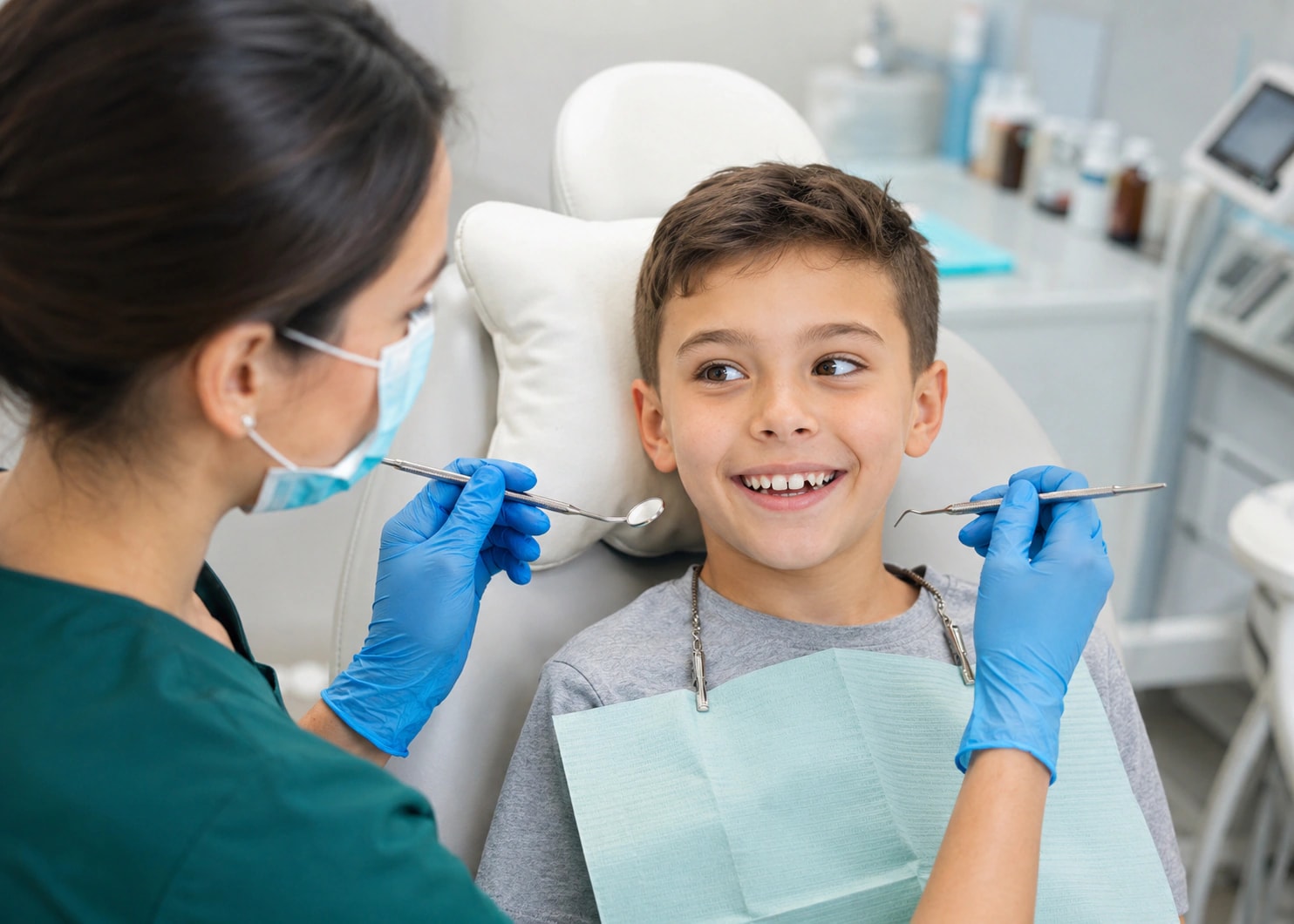
Your dentist checks tooth eruption, spacing, crowding, bite, jaw movement, soft tissues, habits, and cleaning access as appropriate for your child's age.

If monitoring, records, preventive advice, or specialist orthodontic referral may be suitable, the dentist explains the reason, timing, alternatives, and likely next steps.

Timing
Some orthodontic concerns need early referral, while others are watched as adult teeth erupt. The useful next step depends on the finding, your child's age, symptoms, cleaning access, and whether a problem is changing.
Related Care
Early orthodontic assessments often connect with children's check-ups, prevention, clear aligners for older patients, oral hygiene advice, and emergency care when symptoms are urgent.
Fees, Health Funds, Payment Options
Helpful
























FAQs
Answers to parent questions about orthodontic timing, crowding, bite changes, habits, referral, costs, and what an early assessment can and cannot decide.
Timing depends on your child's teeth, growth, symptoms, and what has prompted the concern. You do not need to know whether treatment is needed before asking for an assessment.
The assessment is about timing and clarity, not assuming your child needs orthodontic treatment.
Visit Dalkeith Dental