





Implant restoration considerations
An implant restoration involves a replacement tooth attached to an implant. Suitability depends on records, surgical planning, healing, gums, bite, components, maintenance, and provider pathway.
Implants vs Bridges
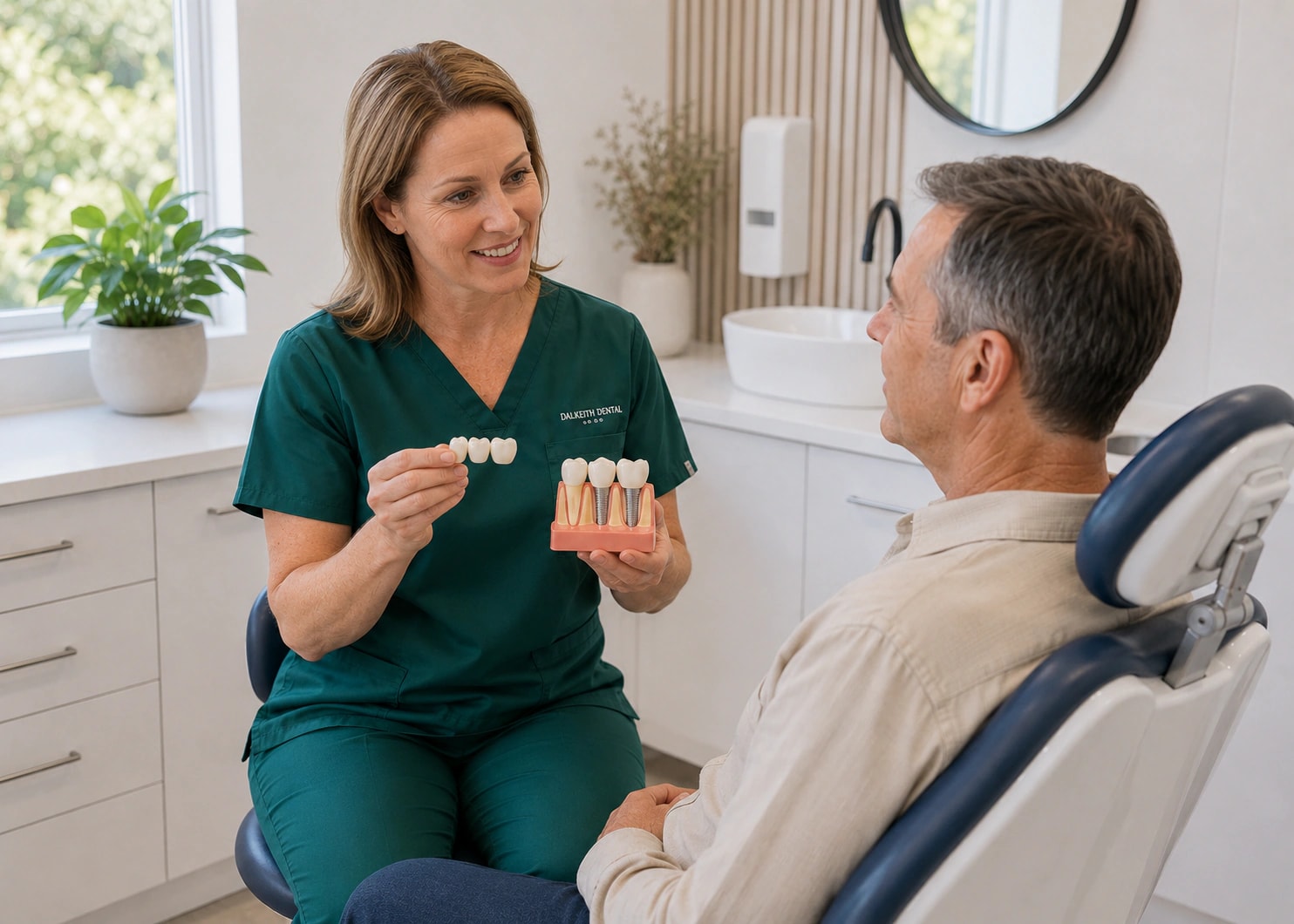
There is no single best way to replace every missing tooth. An implant restoration and a dental bridge solve the same visible problem in different ways, with different implications for neighbouring teeth, surgery, cleaning, time and cost.
Book a missing-tooth comparison appointment if you want to understand the choices before committing to a particular replacement.
Useful for
Patients comparing an implant restoration, dental bridge, denture, staged treatment, referral, or no-treatment monitoring for a missing tooth
Costs
Fees depend on records, surgery or referral steps, restorative design, support teeth, lab work, staging, maintenance, and health fund rules
RISKS & LIMITATIONS
Possible risks, limitations, expected maintenance requirements, and the potential need for additional care are discussed where relevant before treatment begins.
Start Here
A bridge usually relies on nearby teeth for support. An implant restoration relies on an implant placed in the missing-tooth area and may involve separate surgical care. We also consider dentures or leaving the space when those are relevant. Your oral health and priorities determine which comparison is useful.
Comparison
The comparison should be specific to your mouth. Neither an implant restoration nor a bridge is automatically suitable for every missing tooth space.
Assessment
Your dentist checks the missing tooth space, neighbouring teeth, gums, bite, records, surgical or referral factors, cleaning access, alternatives, and costs before comparing options.
The missing tooth space, neighbouring teeth, existing fillings or crowns, cracks, decay, support needs, and tooth movement are reviewed.
Gum health, soft tissues, bone and records needs, cleaning access, plaque, and bleeding are checked because both options need ongoing maintenance.
Bite forces, chewing, grinding, jaw symptoms, and tooth wear can affect both implant restoration and bridge planning.
Radiographs, scans, photographs, previous records, referral letters, implant details, stages, and itemised costs may be needed before deciding.
Your Appointment
We will assess the gap, neighbouring teeth, gums, bite and records, then walk through the practical pros, limitations, maintenance and likely stages of each realistic option.

Your dentist asks about the missing tooth, previous treatment, symptoms, priorities, budget, timing, cleaning routines, and whether you already have surgical or referral advice.

The missing tooth space, neighbouring teeth, gums, bite, cleaning access, and records needs are assessed before comparing options.

Your dentist explains implant restoration considerations, bridge considerations, denture or monitoring alternatives, surgical or referral notes, maintenance, risks, staging, and costs.
Maintenance
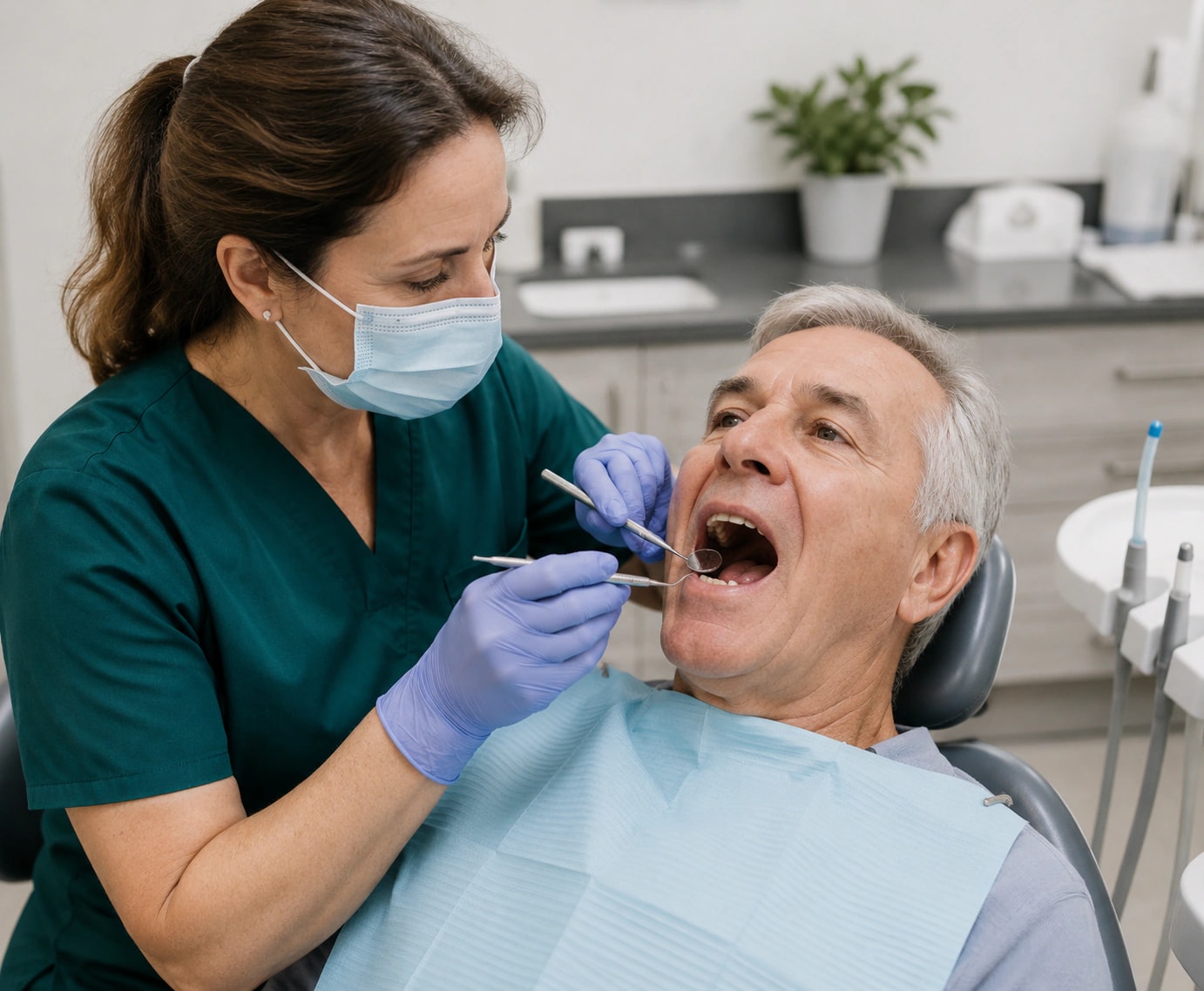
Both implant restorations and bridges need ongoing review, but they are maintained differently. Your dentist or hygienist can explain cleaning tools, review timing, and signs that should be checked.
Related Care
Implants versus bridges often connects with implant restorations, missing tooth planning, bridges, crowns, dentures, and fee discussions.
Fees, Health Funds, Payment Options
Helpful
























FAQs
Answers to common questions about implants versus bridges, suitability, surgery or referral, neighbouring teeth, cleaning, costs, maintenance, alternatives, and staged care.
Neither option is automatically better for every patient. The comparison depends on gums, bite, missing tooth space, neighbouring teeth, records, surgical suitability, cleaning access, maintenance, timing, cost, and your preferences.
Visit Dalkeith Dental